HVAC Repair and Diagnostics in Sacramento
Some problems are not the air conditioner or the furnace on its own. The fan runs and nothing else happens, the system starts and stops every few minutes, or the bedrooms and the kitchen sit at different temperatures. Those are whole-system faults, and they are diagnosed differently.
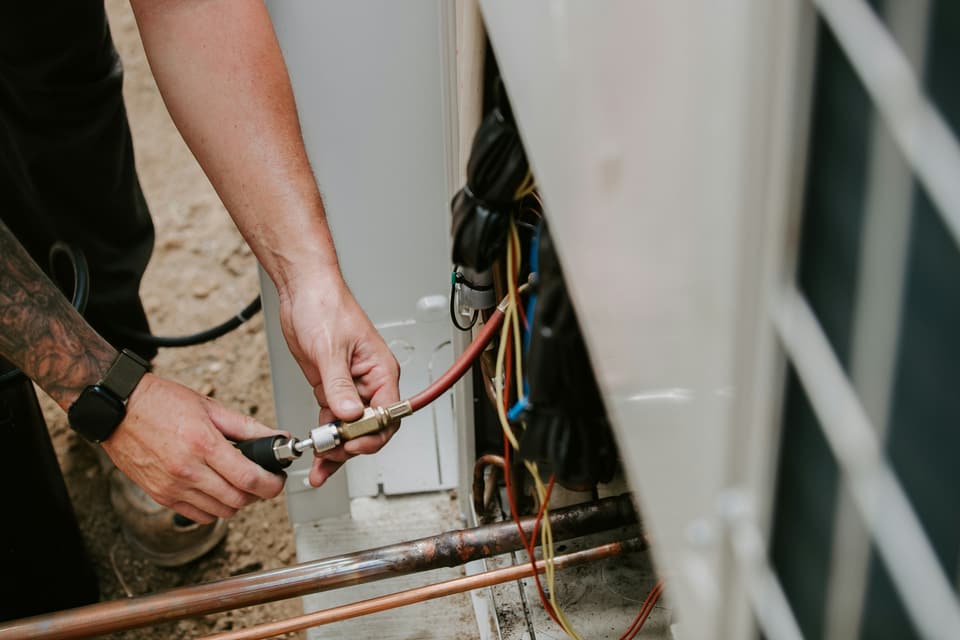
The parts both seasons share
In most Sacramento houses the heating and cooling share one blower, one set of ducts, one thermostat and one control board. The gas furnace in the hall closet, garage or attic does the heating; the outdoor unit and the coil sitting on top of the furnace do the cooling. When the shared parts fail, both seasons fail, and the symptom looks like whichever one you happened to be using.
- Blower motor: no air from the vents at all, in heating or cooling
- Control board: erratic behaviour, a flashing status light on the furnace
- Thermostat or its wiring: a blank screen, or a call that never reaches the equipment
- Ducts and filter: weak airflow everywhere, or in particular rooms
Short cycling
A system that runs for three minutes, stops, and starts again is wearing itself out. In cooling the usual causes are an oversized unit, a thermostat mounted somewhere it reads the wrong temperature, a refrigerant problem tripping a pressure switch, or an overheating compressor. In heating it is often a dirty flame sensor or an overheating heat exchanger tripping the high-limit switch because a filter or duct is choked. The fault code on the furnace board, read through the little window in the panel door, is the first clue a technician will look for.
Hot rooms and cold rooms
This is the most common complaint in Natomas two-storey houses: the upstairs is ten degrees hotter than downstairs by late afternoon. Heat rises, the upstairs ducts are often the longest runs through the hottest attic, and one thermostat downstairs cannot see the problem. In older single-storey houses in Land Park or Arden-Arcade, the far bedroom is usually at the end of a duct that is crushed, disconnected or never sized properly. The fixes range from balancing dampers and a duct repair to zoning or a small ductless unit for one room, and a duct leakage test tells you which before anyone sells you a bigger system.
Noises and smells worth a call
Squealing or grinding
A worn blower or fan motor bearing. It will fail; the question is when.
Clicking that never ends
Often an ignition or relay problem on the furnace, or a contactor chattering outside.
A burning smell on the first heating day
Dust burning off the heat exchanger is normal for an hour in October. A smell like hot plastic or electrical insulation is not; switch it off.
Rotten eggs
That is the odorant in natural gas. Leave the house, do not operate switches, and call PG&E or 911 from outside. Do not call a heating company first.
Thermostats, smart and otherwise
Smart thermostats are a frequent source of calls that turn out not to be equipment faults: a missing common wire leaving the thermostat underpowered, a heat pump configured as a furnace, or a schedule that was set during SMUD's 5 to 8 p.m. summer peak and never changed. If your thermostat was replaced recently and the trouble started then, say so on the call. It saves the technician an hour.
What to have ready
A diagnosis goes faster with a few facts. None are required.
- Roughly how old the system is, or the model number from the outdoor unit label
- Where the furnace or air handler is: closet, garage, attic or crawlspace
- Whether the problem is in heating, cooling or both
- Any code flashing on the furnace board, and when the filter was last changed
If the house is uncomfortable now, send a request with what it is doing and a local heating and air company will call you to arrange a visit.
Common questions
What is the difference between HVAC repair and AC repair?
Nothing official. AC repair usually means the cooling side: the outdoor unit, refrigerant and indoor coil. HVAC repair covers the parts heating and cooling share, such as the blower, controls, thermostat and ducts, and is the right description when you are not sure which half is at fault.
Why does only one room stay hot?
Usually airflow to that room: a crushed or disconnected duct in the attic, a long run with too small a duct, or a closed damper. A duct test or a look in the attic generally finds it.
Should my system run all day in July?
On a 105-degree afternoon it may run for hours, and that can be normal. It should still be producing cold air at the registers. Running constantly with a weak temperature difference is a fault; running constantly with a good one means the house is gaining heat faster than the system can remove it.
Who do I call if I smell gas?
Nobody from inside the house. Leave, leave the door open, and call PG&E or 911 from outside. A heating company comes after the gas utility has made the house safe.
Who actually comes out?
An independent local heating and air company. This site is an advertising and referral service operated by Pinecrest Advisory Services, LLC; it does not employ technicians or hold a contractor licence.
Other heating and cooling help in Sacramento
- AC Repair in Sacramento, CA
- Furnace Repair in Sacramento
- Heat Pump Repair and Installation in Sacramento
- Air Conditioner Replacement in Sacramento
Also serving
HVAC Repair is available beyond Sacramento, across Arden-Arcade , Carmichael , Elk Grove and Rancho Cordova .
Request an HVAC diagnosis
Say what the system is doing and a local heating and air company will call you to arrange a visit. Calls answered Mon–Fri 7am–7pm, Sat 8am–4pm Or call (916) 237-9687, which is quicker when the house is already hot.